OneCoventry Cultural Archive
This essay explores how global brands leave traces long after they disappear—and how local culture reshapes them. The story of KFC in Iran is not about fast food. It is about memory, identity, and the way ideas outlive politics.
How a single restaurant in 1978 became a cultural echo that still lives on in Iranian streets today.
In the late 1970s, Tehran was a city in motion…
Neon signs glowed along wide boulevards. Western fashion mingled with Persian tradition. Movie theaters showed Hollywood films. International hotels filled with diplomats, engineers, and travelers. Iran, under the Shah, was rapidly modernizing—and with modernization came symbols of global culture.
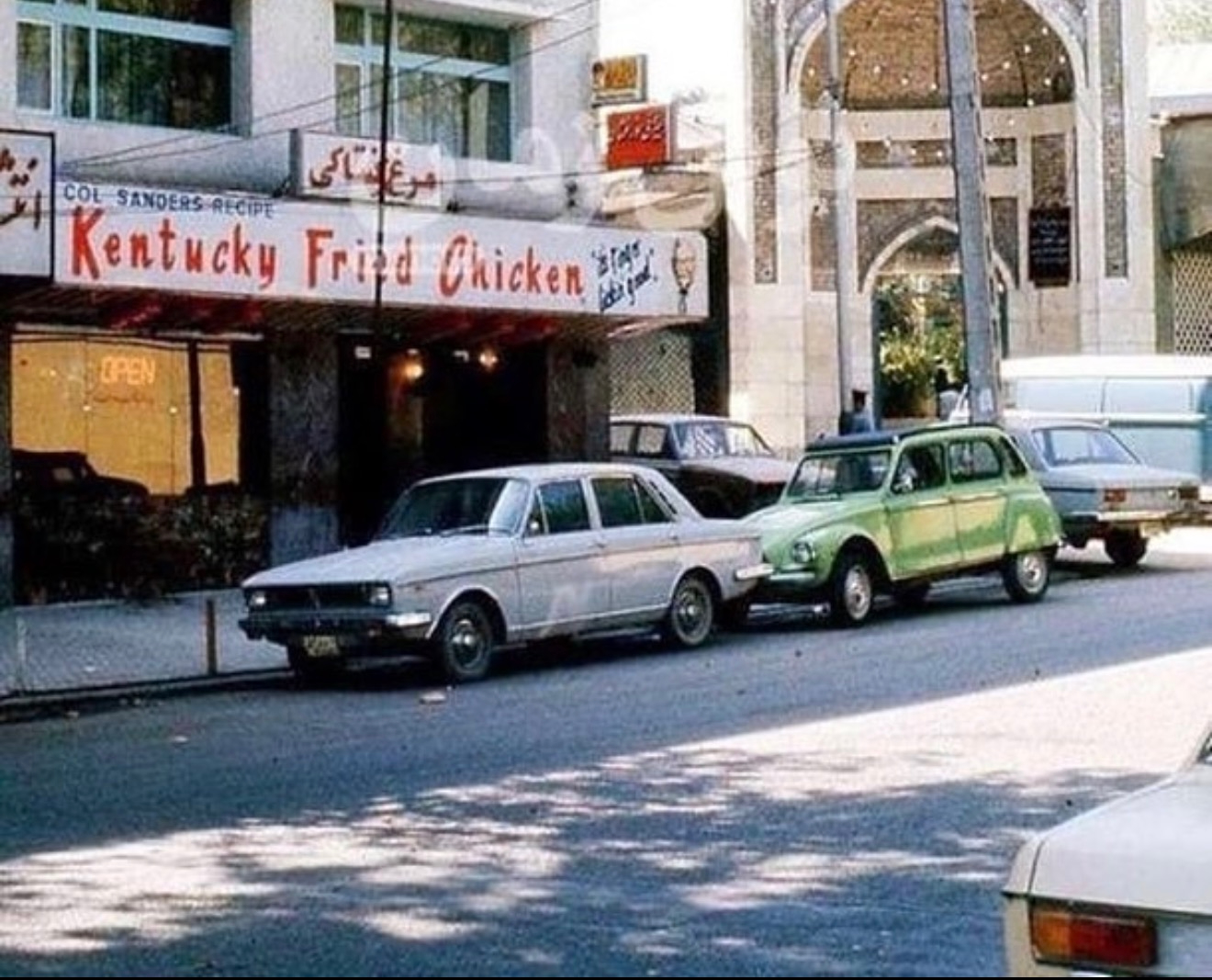
One of those symbols arrived quietly in 1978: Kentucky Fried Chicken.
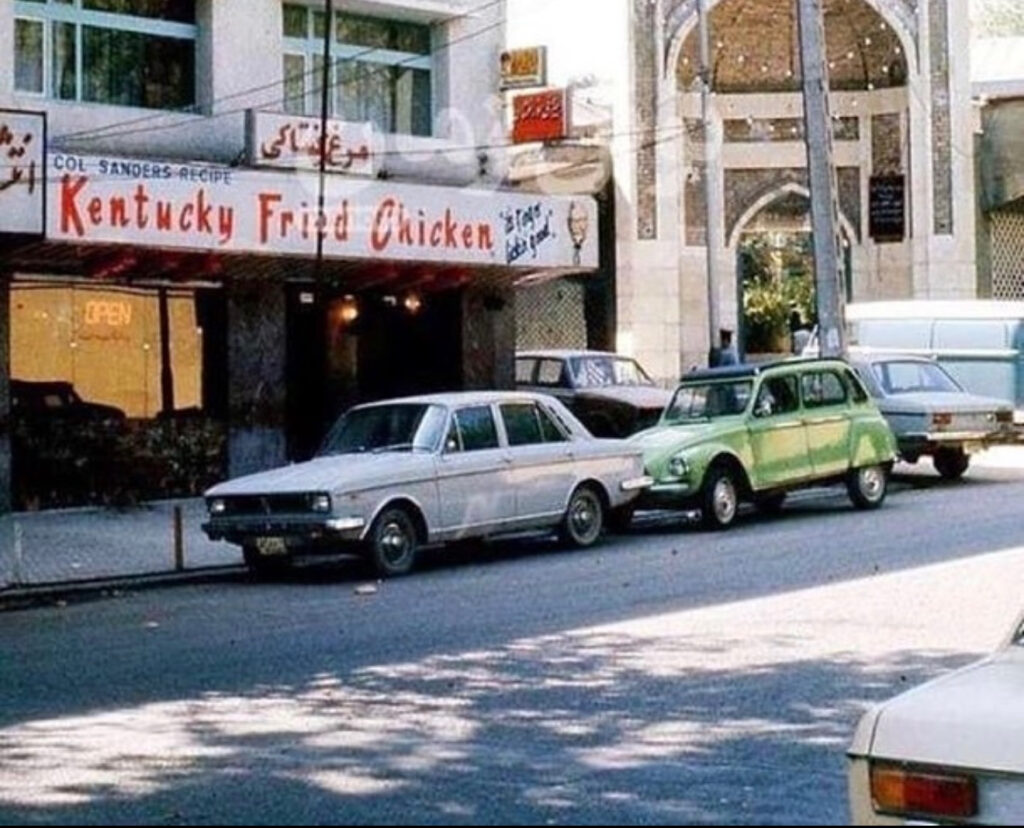
In the upscale district of Tajrish, a red-and-white restaurant opened its doors. It carried the smiling face of Colonel Harland Sanders, and for many Iranians, it was their first encounter with American fast food. Reports from the time suggest that the opening had real corporate ties to KFC, possibly even connected to Sanders himself. It was more than fried chicken—it was a marker of Iran’s place in a global, Western-facing world.
But history was already accelerating.
Within a year, the Islamic Revolution swept across the country. The monarchy fell. The nation redefined itself. What had once symbolized openness now symbolized excess, foreign influence, and American power. Western brands vanished almost overnight. The KFC in Tajrish—like many foreign ventures—closed its doors.
The Colonel left Iran, and he would never officially return.
Yet something interesting happened after the doors closed:
The idea of KFC stayed.
Throughout the 1980s and 1990s, Iranians continued to crave fried chicken. Entrepreneurs filled the gap. Small shops opened with names like “Fried Chicken,” “Tehran Fried Chicken,” or simply “KFC”—unofficial, unlicensed, but unmistakably inspired. They mimicked the colors, the menu boards, the bucket imagery. Some even used near-identical logos.
These were not acts of piracy in the Western sense—they were cultural echoes. In a nation cut off from American franchises by sanctions and politics, people recreated what they remembered.
Fried chicken became Iranian.
Spices changed. Portions changed. Rice replaced coleslaw. Halal preparation was standard. These restaurants became neighborhood staples—places where teenagers gathered, where families picked up dinner, where nostalgia quietly lived. For a generation born after the revolution, “KFC” didn’t mean America. It meant that chicken place down the street.
In 2012, the story flirted with resurrection.
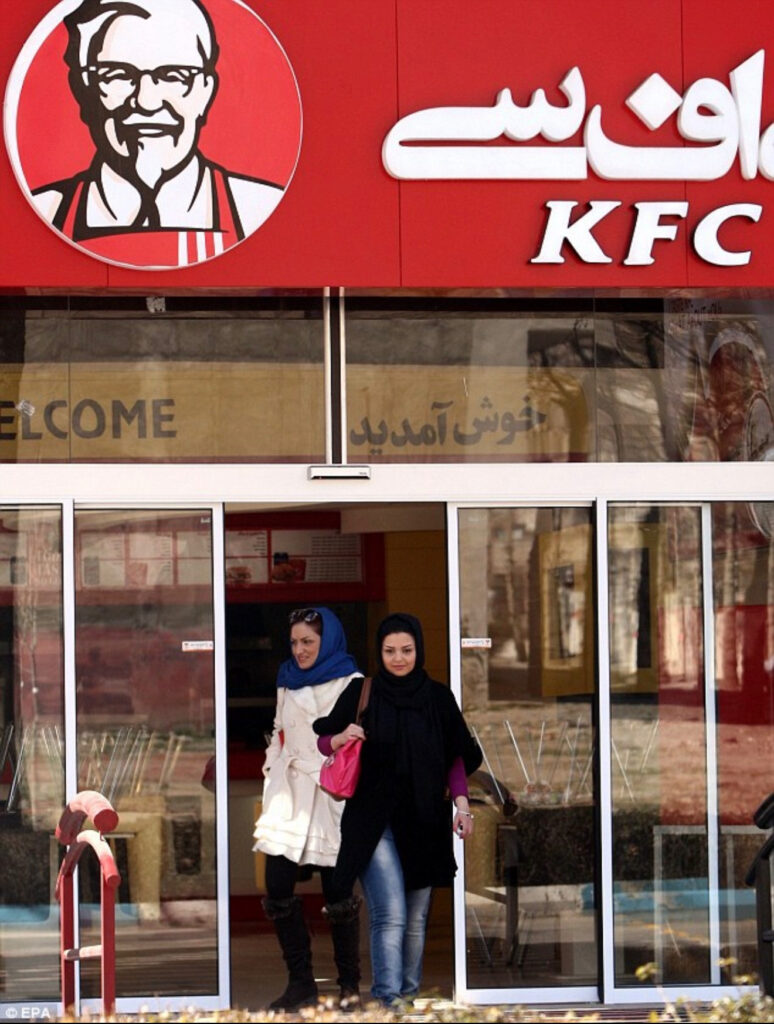
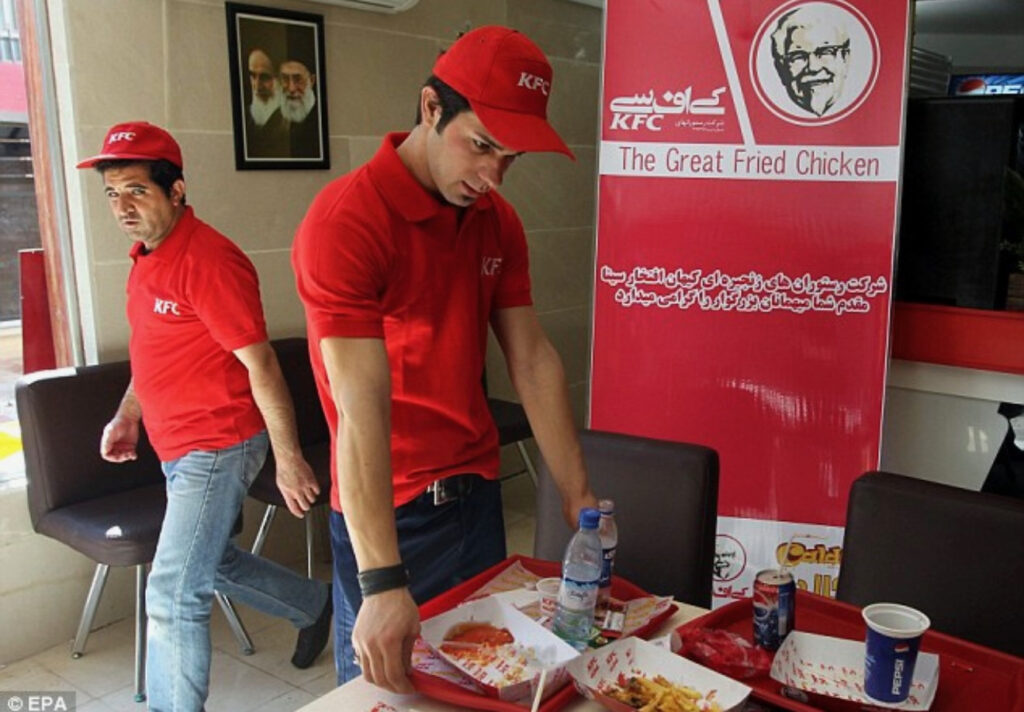
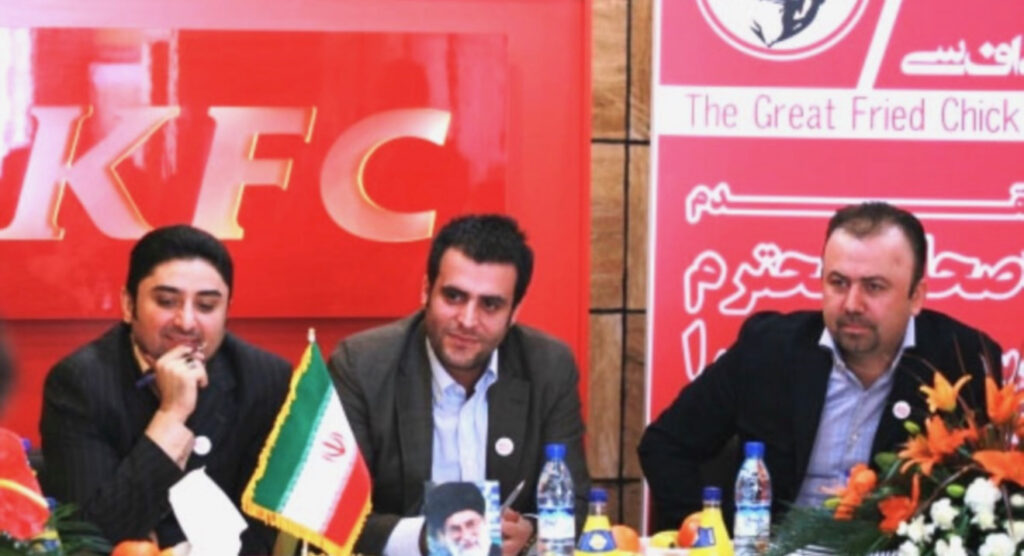
A restaurant in Karaj opened under the name “Kentucky Fried Chicken.” Iranian media buzzed with the idea that KFC had returned. Photos spread online. The red signage looked authentic. Crowds gathered.
Then came the denial.
Yum! Brands—the American owner of KFC—announced publicly that it had no agreement with anyone in Iran and no plans to operate there. Legal pressure followed. The restaurant closed. Other attempts met the same fate. Politics, sanctions, and trademark law shut the door each time.
And so the Colonel remains absent.
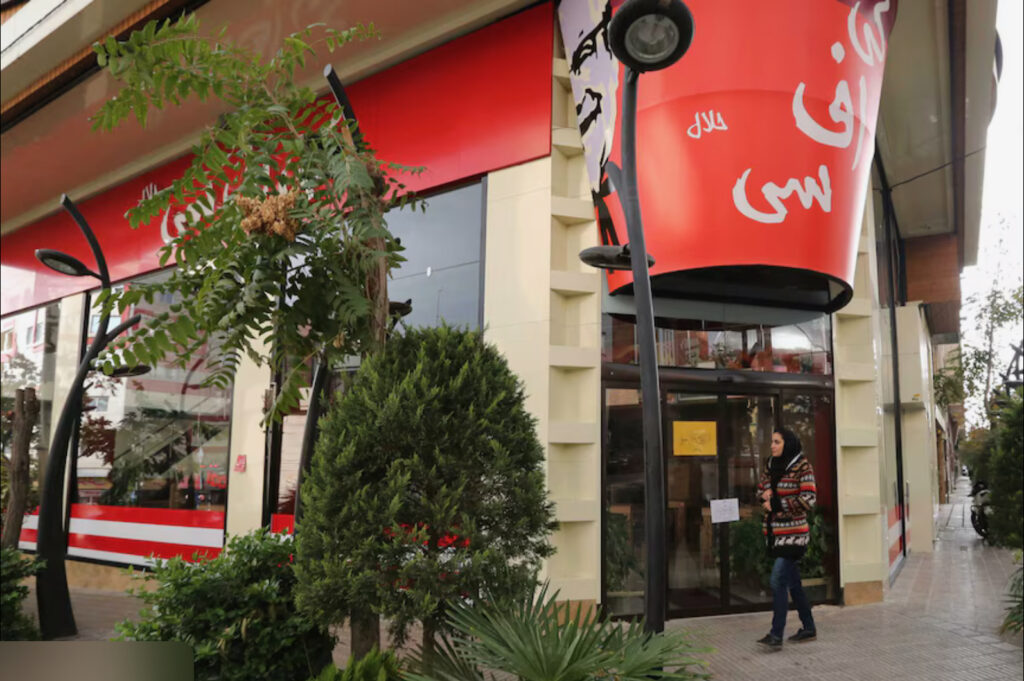
Today, Iran’s cities are still full of fried-chicken shops—some modern, some nostalgic, some boldly imitative. They exist in a strange space: inspired by a brand that cannot legally exist there, shaped by a culture that made it its own.
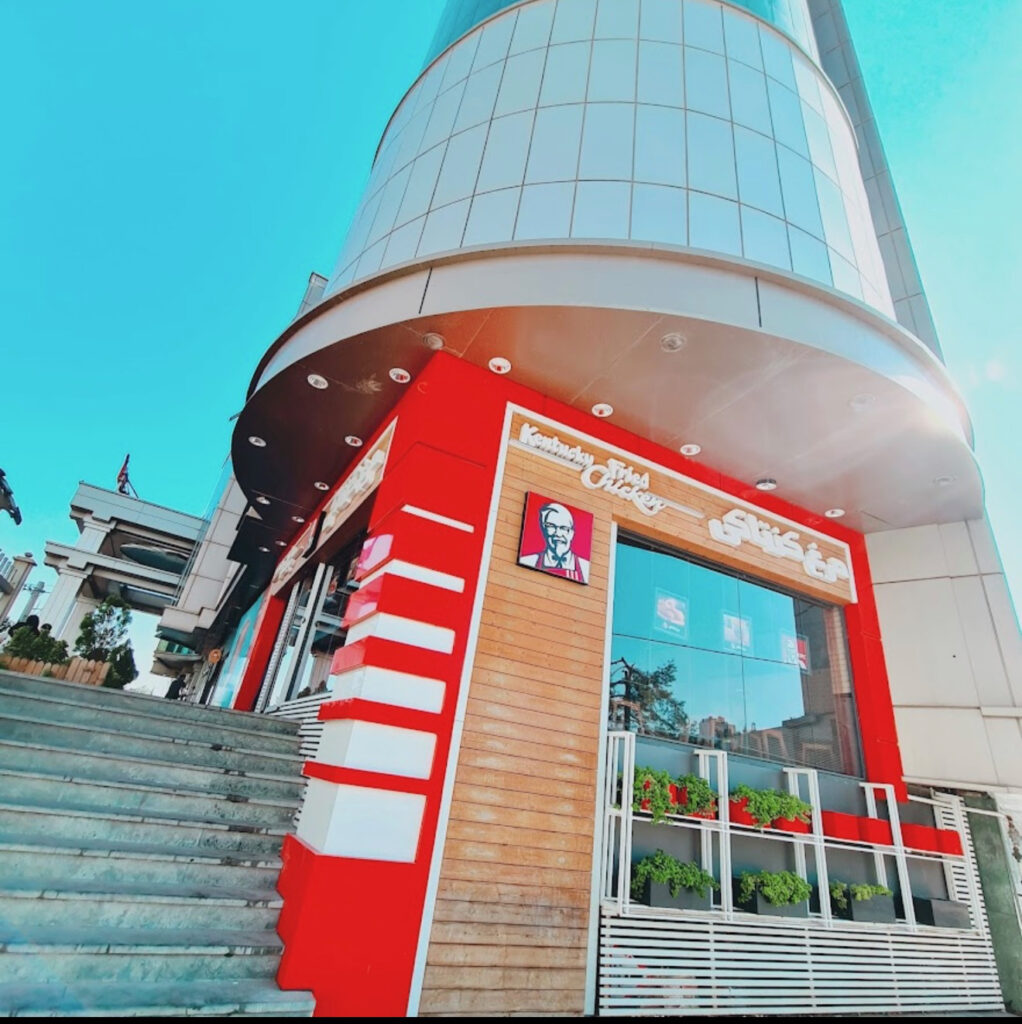
KFC in Iran is not a story of corporate expansion.
It is a story of interruption.
Of memory.
Of how a single restaurant, open for barely a year, became a cultural fossil—replicated, adapted, and remembered long after the original vanished.
In Tehran, you can still walk past red-and-white storefronts serving golden chicken. The name may differ. The spices may be local. The politics may forbid the logo.
But the echo remains.
The Colonel left in 1979.
Iran kept the chicken.
—
Daniel Tarkeshian
OneCoventry Cultural Archive
Leave a Reply